


What if Colombo could once again become the Garden City of Asia?
The world's most loved cities are not necessarily the tallest, fastest, or richest. They are cities where people walk, meet, explore, linger, and return. Cities where streets invite movement rather than merely carrying traffic.

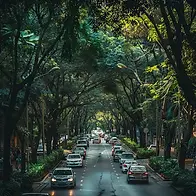
The legacy remains visible today in the tree-lined avenues of Cinnamon Gardens, Independence Avenue, Reid Avenue, Albert Crescent, and the green spaces surrounding Viharamahadevi Park.
The area now known as Colombo 7 evolved from vast cinnamon plantations and landscaped urban planning that created one of the most attractive tropical city environments in Asia.
By the late 1800s and early 1900s, planners deliberately integrated broad boulevards, public parks, rain trees, and shaded avenues into the city's design, creating a unique urban experience that blended nature and commerce.
Today, Colombo 7 remains one of the city's most walkable and visually appealing districts.¹The question is simple:Can Colombo reclaim and expand that legacy?
Why Shade Matters
Every tree planted beside a road does far more than provide shade.It cools the city.It improves health.It encourages walking.It supports local businesses.It creates a better tourism experience.

The World's Most Livable Streets Have Trees
Walk through cities of the world
Singapore
Melbourne

Vancouver

Colombo

City in Nature (2020) OneMillionTrees
Singapore's transformation began in 1967 with the Garden City Programme. Today, its OneMillionTrees initiative aims to plant one million more trees by 2030
Urban Forest Strategy (2012)
Melbourne's Urban Forest Strategy is a long-term commitment to increase tree canopy, reduce urban heat, improve biodiversity and create greener, healthier neighbourhoods for future generations.
Greenest City Action Plan (2011)
Vancouver's Greenest City Action Plan combines urban forests, active mobility and sustainable public spaces to improve air quality, strengthen climate resilience and make the city one of the world's most livable urban environments.
What if Colombo could once again become the Garden City of Asia?
Walking & Cycling Creates Economic Value
The economics are simple.
People moving at 5 km/h notice cafés.
People moving at 30 km/h notice buildings.
People moving at 60 km/h notice traffic lights.
Walkable streets create opportunities for Cafes and restaurants, Retail stores and art spaces, Heritage attraction, Community events and Tourism experiances
Every shaded street becomes a potential economic corridor. Every tree becomes part of the city's tourism infrastructure.

Colombo's Tourism Opportunity
Each year Colombo attracts 400,000 toursits and dreams of a million by 2030.
But most spend less than 48 hours in the city before travelling elsewhere.
What if Colombo itself became a destination?
What if visitors spent 72 hours exploring neighbourhoods, cafés, parks, museums, cultural districts, waterfronts, and cycling routes?
What if Colombo became known as Asia's Most Walkable Tropical City?
The Shade The Road Project
The first step is understanding where we are today.
Phase 1: Tree Audit
We will map Existing roadside tree cover, High-temperature corridors, Missing canopy zones, Priority planting opportunities, Public spaces with low shade coverage
Phase 2: Plantable Colombo
Not every road needs widening.
Some roads need trees.
We aim to identify, Empty road reservations, Pavement opportunities, Public spaces suitable for canopy expansions, School zones, Tourist corridors, Cycling corridors, Walking corridors
The objective is simple:
Every year, more shade.
Phase 3: Community Partnerships
Cities are built by communities.
We invite you, Residents, Businesses, Schools, Universities, Architects. Engineers, Urban planners, Cyclists, Walkers, Environmental groups
Become partners in creating a greener Colombo.
Every Individual Project, every roadside business, every neighborhood improvement project. Can contribute to the city's urban canopy.
